On a lighter note. I just retook my microexpressions training tool test and got it up to 82%, which is certification level. I worked hard on it during a recent holiday and can get 100% in the practice sessions but my main problems still stem from mis-recognizing sadness as anger and understanding the differences between genetic types and individual emotional baselines.
Which means I can’t see the wood for the trees sometimes! But hey, practice will make perfect, and I’m aiming for my 95% expert completion in the next test window three months from now. I’ve been chatting on this blog with Cliff Lansley – Director of the Emotional Intelligence Academy here in the UK – Dr Ekman’s affiliate – and came across this Youtube video of one of his early seminars. It makes for very interesting reading. And has got me thinking about how lying shows up in writing. Many of the things he lists here as signs of lying in verbal and body language are also signs of lying in written English, I’ll write more on this in coming posts, but for now enjoy the video of the illustrious Mr Lansley in action.
Cal Lightman visits underground fights so that he can stay sharp on how people express or hide their emotions. There’s good reason for this, emotional awareness skills need to be refined and refreshed regularly.
For example, one thing that becomes apparent when you use the microexpressions training tool (METT) over time is that each person’s neutral expression is slightly different and sometimes their neutral baseline can even look like an emotion.
How is that possible? Well, some people have naturally droopy faces and so look naturally more sad, or more rounded eyes and lips that can easily mimic surprise.
Genetic types also throw up their problems. It could be that the fuller lips of someone of african origin make you mis-read sadness (the downward turn can be less obvious than in thin lips). Or that the sometimes non-existent eye brows of Asians, or even fanatical pluckers, hide the same emotion because you can’t see the brows coming together. And it’s just as easy to miss anger in the thin lips of many caucasian genetic types.
This woman's neutral expression has hints of other emotions. Could you tell the difference?
The only way I’ve found to get round this is to familiarize yourself with specific genetic facial features. If you live and work in an environment where one genetic group dominates you may find this difficult. The METT tool can help if this is the case as you can freeze emotions you’re uncertain of and rapidly click them on and off to train your unconscious what to look for.
Alternatively you can find cultural mixes and good people to watch in a range of different places…
Holiday resorts
Hospitals
Libraries
Public Transport – trains, planes, buses and so on.
Cafes and bars
I’ve particularly found the first two to be excellent. The first because of the range of different cultures on display – it very quickly became obvious at a resort in Crete recently that the Russian guests, as a social group, have a more serious, even slightly angry, baseline. There could be many reasons for this, from the social class/history of Russians that can afford such holidays, to their regional backgrounds or the amount of sleep they take. Definitely an area for more study.
Hospitals, I only found out today, are particularly good. There are lots of great studies in those waiting rooms, from lots of cultures, classes and of varying ages. They each have their own way of handling anxiety if they are patients, some get angry, others happy, others scared. And if they are partners or family their support style differ as well – some just spout BS and platitudes, some genuinely care.
What was obvious from this morning’s range of emotions is that anywhere where you can find strong emotive environments is going to be productive, usually where there is risk, danger, fear or social masking are probably the best places to try. Now, I wonder if there are any underground fights in my local area?
Sometimes you've just gotta get your hands dirty
So do Russians smile? You bet they do, when I’ve worked with Russians in their own territory, all the time. But as expats or tourists outside their comfort zone I’m not so sure.
Welcome back, in the previous post, Get in Their Faces, we discussed the need to be able to observe other people’s reactions more effectively and how we often need to overcome our learned aversion to looking people directly in the face (especially difficult for men it seems, even though Cal Lightman makes it look easy). We need some real-world microexpression exercises to make this happen.
First off, let’s see what we normally do: the learned dynamic in Q&A scenarios or general chit-chat is:
1. Ask a question -> 2. Avert gaze until a change in the person being questioned’s voice tells us it’s time to -> 3. Look back and ask next question.
So, obviously what we want to change is this middle phase, we want to be able to observe the person in front of us without them feeling uncomfortable. The first thing you need to do is ask yourself, what do I currently do during phase two now?
EXERCISE 1: Observe Yourself
This will depend on what your working and home life is like, if you work in a customer facing environment and see a range of people all-day everyday then this won’t take long. Probably no more than a day. But if you’re in a solitary job, or at home a lot, give yourself 1-2 weeks to do this or, alternatively, actively put yourself in positions where you interact more over the next few days.
Then memorize the 1, 2, 3, dynamic above and observe what you do in this middle phase. Do you look away? Do you find it easy to look back? Do you find it extremely difficult, almost painful (as I did), to look back? What happens if you do look back? Can you only look back for a moment? Or are you already able to look people in the face comfortably without you or them becoming upset?
Whatever you observe there is no right or wrong with this, it’s simply what we need to establish before we move onto exercise two.
EXERCISE 2: Unleash the Watcher
During exercise one you will probably have tried to make yourself look back during phase two. You’ll find over repeated attempts that the easiest way to succeed at this is to make yourself relaxed and then allow yourself to simply observe what you’re doing without judgement. People who meditate, go for long walks, run, climb, or shoot will be good at this, or any activity where relaxed concentration, attentiveness as Dr Ekman puts it, is required.
If you’re finding it difficult as I was. Then attempt it for a few days, stop, and then come back to it. Don’t make every conversation a battle of wills with yourself, it’ll only be counter-productive. What really cracked it for me was taking a break for a few days then coming back to it with my partner – she’s a high level corporate negotiator. She told me that many years ago during her negotiation training each candidate was videoed and their poor-negotiation habits were highlighted and they had to work on them if they were to succeed. One of them for her was not breaking eye-contact repeatedly. As eye-contact and staring can be used to intimidate others during negotiation. She was given this simple little meme to work with: “Don’t be afraid to maintain eye-contact”.
Try it. Next time you look away, challenge yourself. Don’t be afraid, maintain eye-contact.
EXERCISE 3: Get in their faces without getting a punch in yours
Okay, so we’ve observed our learned style of observation, we’ve unleashed the watcher within, and we can maintain eye contact through a good part of phase 2. But what happens if the other person becomes uncomfortable, defensive, aggressive, or even violent? Most likely the person you are talking to will simply avert their gaze if they feel uncomfortable, but depending on who you’re talking to the results could be very different. A bouncer may give you a totally different response to a librarian for example. And maybe not what you’d immediately think!
Basic Technique: Soft vision
Look but don’t stare. Let your eyes move around the face in a relaxed manner. Neither too quickly, as if you’re disinterested, nor too slowly so that you’d don’t zone out or stare.
Advanced Technique: Use your vision systems
Most people aren’t aware that we have two different ways of seeing. From our days as hunter gatherers we have what we commonly know as central and peripheral vision systems. If you imagine the peripheral vision was what we used when we were scanning the landscape for prey (mobile or static), the central (sometimes called tunnel) vision system was what we used when we found our prey, zeroed in and chased it – or even ran away from it. Central vision causes our heart rate to elevate, our palms to sweat and our systems to go into fight or flight mode. If someone was glaring at you and looking twitchy how would you feel?
Peripheral vision on the other hand is a restful state which allows our unconscious to do most of the work and calms our inner monologue. Most of us are familiar with central vision, we use it all the time to watch TV, use our phones, use computers but during observation it helps to be able to switch between the two. There are many emotions at play on the face, using peripheral vision you can scan the face and zero in when you need to and back out again. Learning to use this system also helps with your stress levels and will make you look less of a nutter when you’re ogling someone for signs of emotional leakage.
EXERCISE 4: Peripheral Vision
Gaze gently on a point directly in front of you. Then expand your awareness as far to edges of your vision as is possible. Begin to discern objects, without forcing it. What you can see? Keep practicing this until it feels comfortable. In a quiet room where nothing is going on you won’t always notice that much, but take your peripheral vision out for a walk and you’ll be amazed by what you can see. See how far back you can move your perception. Can you see behind you? What animals are you aware of? What vehicles? Any objects that aren’t moving?
What's she thinking? Can you guess?
Now when you’re looking at someone’s face, staring, whether from central or peripheral vision, will be unnerving to the other person. Instead gently change between the two systems, you’ll be more relaxed and more able to see what is going on. Again this is a technique that gets easier with practice. It will also help you relax due to the instant changes in your nervous system that the hunter vision gives you. It’s such a powerful technique that it’s taught to elite team-sports players and martial artists, so that they are more aware of what’s happening on the playing field or mid-fight. For a simple practice that often requires extraordinary active peripheral vision, try juggling.
These are the basic real-world microexpression exercises I’ve developed that work for me and those around me – at least for putting microexpressions into action.
I’ll be putting together a cognitive behavioral therapy worksheet that should help anyone who gets stuck on these in-their-face exercises. Some of these learned behaviours can be very hard to break. To give you an example my 21 month old son has only recently started to look away during conversations and it takes a good 10 days for the little guy to unlearn any habit. At it’s most basic avoiding eye-contact means he doesn’t have to acknowledge what’s going on around him, but also it’s probably what he sees every day. So stick at it and you’ll get it.
If there’s anything you’d like me to expand on please drop me a line in the notes below.
In the coming weeks we’ll be looking at Dr Ekman’s seven universal emotions and seeing how many you can spot while using the above techniques. Take another look at the pictures on this page, what emotions do you think are on display? I scoured several photo libraries with emotion keywords and nearly all photos available are mislabelled, which means that even photographers – people who look at faces every day – don’t necessarily know what they’re looking at. Answers in the next article, but I’d love to hear your guesses!
Viewers of Lie to Me will have noticed how Cal Lightman is always getting right up people’s noses, I mean literally. Part of Tim Roth’s excellent characterization is that Lightman always looks directly at them, even the baddest scariest guys in life-threatening situations. And, after reading more on Paul Ekman’s work, there’s a damn good reason for this. Most of us don’t look at people’s faces when they’re talking, we think we do but really we don’t.
When I trained with Dr Ekman’s micro-expressions tool (article here) I improved my emotion recognition in just a couple of hours, however when it came to applying it I found it almost impossible, apart from with children. Why is this? Well with children, culturally, we are allowed to look them directly in the the face, the same with performers or politicians, anyone who has given us permission or who doesn’t have the social training most of us have.
For example we are trained from an early age that ‘boys don’t cry’, so, unconsciously, we don’t look at them when they are sad. Even if intellectually we know it’s not true. Each family may have their own rules for ‘Don’t stare’. Or we may learn not to look at Dad, or Mum, when they’re angry – it might not be beneficial for our health.
Think about it, better yet, try this: watch yourself when you’re talking to someone, you rarely look at them until you hear a change of intonation which is the auditory cue for a response. It’s subtle but it’s always there. I’ve been watching myself and realize that I do this all the time. In fact it’s almost impossible to stop yourself doing it. I mean how old are you? Subtract maybe 2-3 years and that’s how long you’ve been doing it without even being aware of it.
I now have to re-train myself to get over this if I want to be able to apply my new knowledge in a meaningful way. I’ve only just started doing this today, and it’s hard work, but boy do you suddenly see what’s going on with other people. It’s tough not to look away though. I’ll keep you posted on how it goes and give you some techniques to work with that’ll make it easier for you to see what people are really feeling and thinking in the next couple of articles.
If you have an idea for training or a lie you want to test please get in touch in the comments below.
I’ve been interested in liars and lying for a long time, ever since a situation where I realized people close to me had been deceiving themselves and me for years. I’ve read and studied books on how to spot the lie and the liar, there’s a lot of information out there from body language and persuasion skills, to NLP patterns and interrogation techniques. But one of the most interesting techniques has to be spotting microexpressions as per Dr Cal Lightman in the TV series Lie to Me.
Tim Roth’s character is a deception expert who uses the momentary unconscious microexpressions we all exhibit to tell when people are lying. They boil down to Anger, Disgust, Fear, Happy, Sad, Contempt, Fear and Surprise. This fictional character’s abilities are actually based on real-life Dr Paul Ekman’s work. So I decided to give his online training tool a go, arguing to myself that these seven emotions were surely just what we teach children, everybody knows them, how hard can it be?
I first tried the demo and scored a measly 21% emotion recognition. I was shocked. The only emotions I could readily recognize were anger, disgust and happiness. It was a profound realization that I’m not emotionally aware as I think I am. I confuse sadness with anger – which explains, for example, why if I can’t make a sad person laugh straight away I basically get angry back at them. Appease the aggressor, then attack.
I signed up on the spot. Within a half hour’s training I could spot more emotions easily.
While dropping my son off at nursery I saw the straight lips and straight eyebrows that indicate fear. He regularly gets separation anxiety – the fear that his dad/mum won’t come back. It’s made me change the way I drop him off – rather than go in the car, I now walk him to nursery in the pram, we chat to his mum for part of the way, spot buses, dogs and birds and he’s generally a bit less anxious when we get to nursery – no tears this morning – a bit of bottom lip mind. But I’m working on it.
Interestingly I saw disgust on one of his little friend ‘s faces when I said hello to her in the morning, but when I saw her in the afternoon she couldn’t stop smiling at me. What this has already taught me is that as well as spotting deception you can respond much more to what those around you are feeling. But only if you don’t take the observed emotion personally and use it to understand the person’s needs.
The training is basically a series of neutral photos followed by one of the seven emotions. In training this is done at slow speed with voice over explaining what to look for. In the pre-test you set the speed of the flashed emotions. I settled for the highest speed and improved my score to 61%. A comprehensive review and then I tried the full test. I scored 71%. That’s 100% on happy, disgust and contempt. But 0% on things like sadness. It’s a bit of a kick in the teeth to realize that as a 39 year old adult, I can’t recognize sadness in others (at least for split-second micro expressions, if you were blubbing in front of me right now, I’d catch your drift!).
It’s interesting and profound training and it reminds of some of the childcare books and flash cards that encourage you to teach emotions to your children. The program tells you to not take the test for another three months so that you don’t become overly familiar with the faces and predict the responses from memory.
That’s a good tip if you genuinely want to progress, although I would recommend going over it 24 hours later (minus the test) as well.
Sleeping on it, and then coming back to a subject when you’ve almost forgotten it are two scientifically proven ways of increasing your skills and recall.
If you get 80% in the test you’ll get a certificate of competence, if you get 95% you’ll get an ‘Expert’ certificate. I think the test and training could be improved by properly randomizing the final test with a baseline photo then morph to the emotion so that you can repeat it more quickly, other than that, I’m sold on the emotional recognition idea and looking forward to getting my Expert cert – one day!



 by
by 
 Cal Lightman visits underground fights so that he can stay sharp on how people express or hide their emotions. There’s good reason for this, emotional awareness skills need to be refined and refreshed regularly.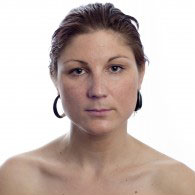


 Writer, Entrepreneur, Speaker, Father.
Recent Comments